Sustained
永续
/PROJECT_INFO
/OVERVIEW
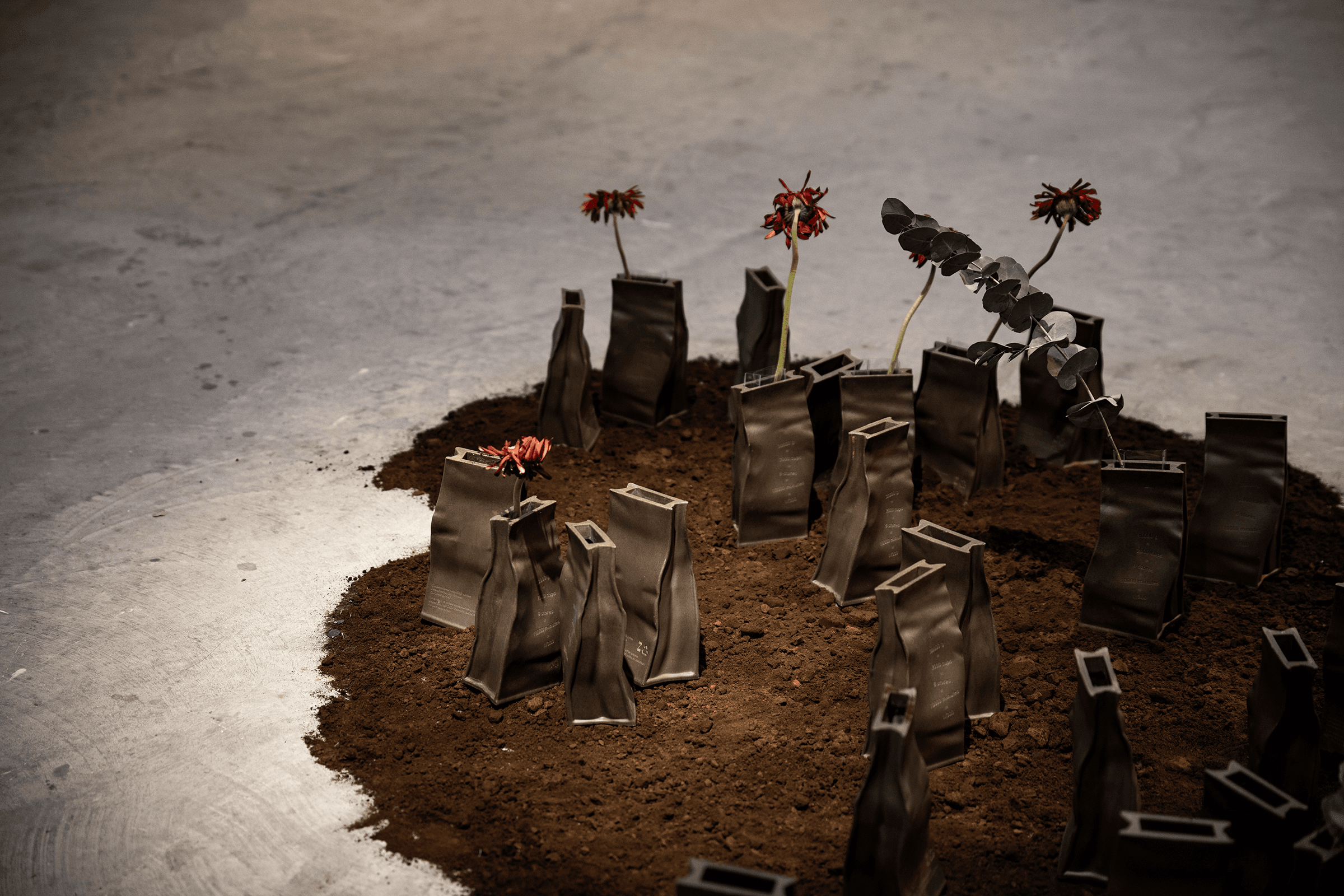
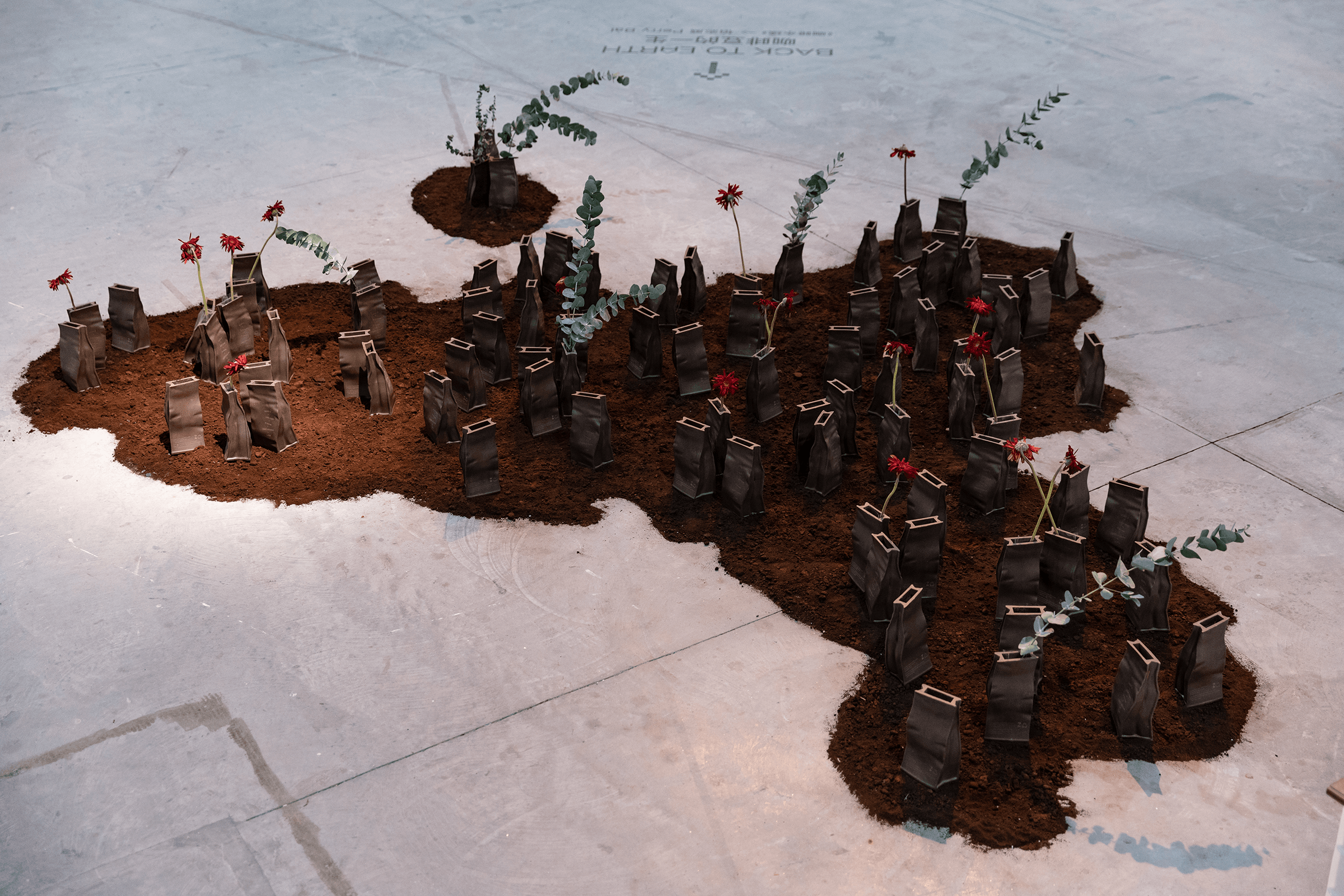
Sustained reshapes waste from coffee consumption into vases that retain the folds and compression of discarded packaging, presenting them with loose coffee grounds and fresh flowers in a floor installation. As the flowers decay during the exhibition, the resin-bound coffee material remains comparatively stable. Rather than offering a clean narrative of recycling, the work allows material residue, function, and beauty to coexist, revealing the irreversible transformations that occur between use, disposal, preservation, and re-formation.
/FULL_PROJECT_TEXT
Sustained is a floor installation made from waste produced through coffee consumption. Zhiwei Bai collaborated with multiple coffee shops to collect a large quantity of used coffee grounds within a limited period. Because untreated grounds quickly develop mould, their collection, transportation, drying, and preservation became part of the material process through which the work was produced.
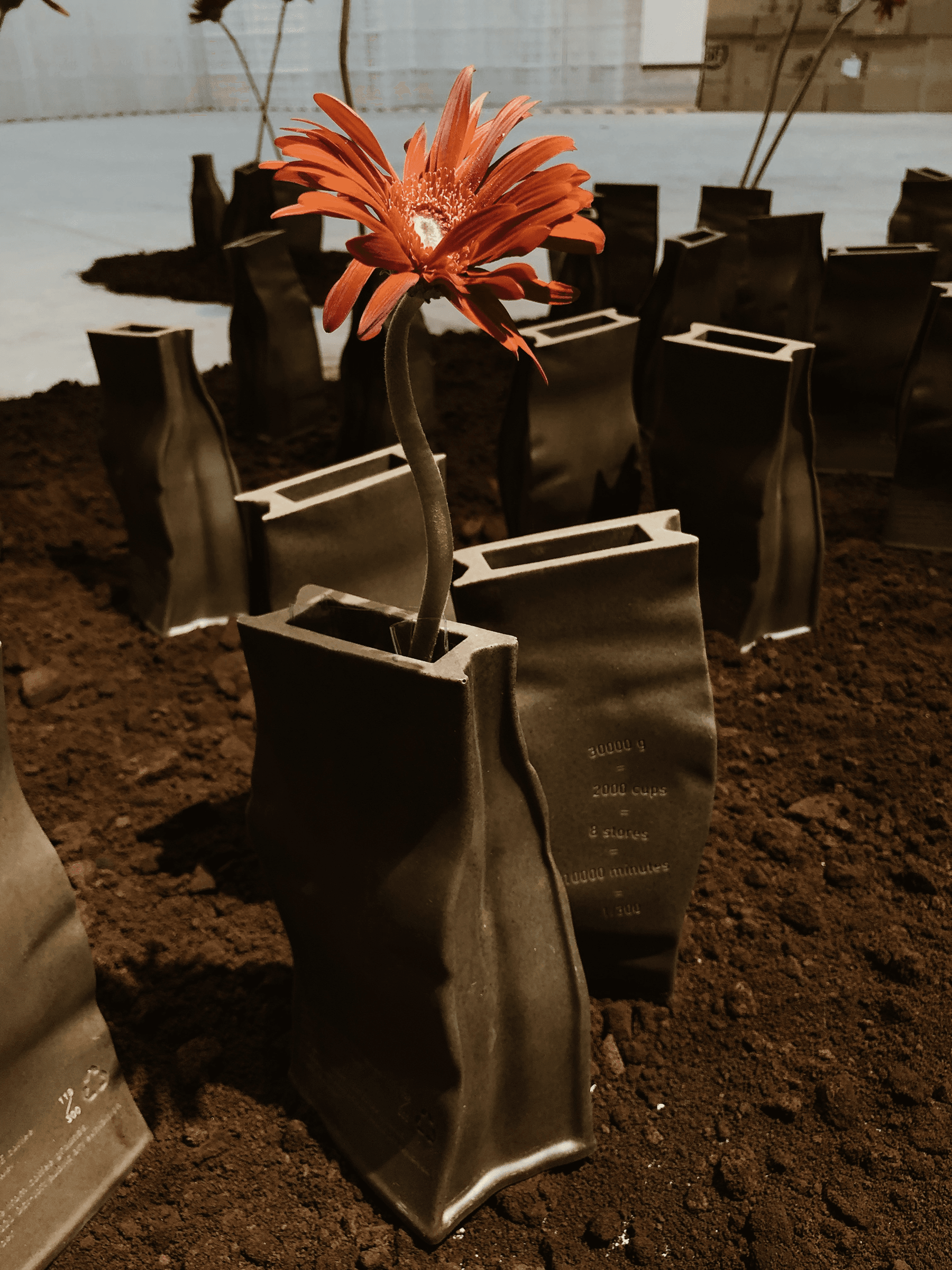
Bai combined the grounds with resin and cast them in moulds to create a group of containers marked by compression, folds, and deformation. Their forms imitate discarded coffee bags, yet each is given the opening and function of a vase. The residue of coffee consumption is thus transformed into an object capable of holding flowers while retaining the appearance of something that has been thrown away.
Loose coffee grounds cover the floor of the installation, across which the dark containers are distributed at varying densities. Some hold living flowers. As the exhibition progresses, the flowers move from bloom toward decay, while the vessels made from coffee grounds and resin remain comparatively stable. The temporary changes of living matter coexist with waste stabilized through an industrial material. “Sustained” therefore describes not only preservation or recycling as a positive promise, but the different rates at which materials persist and change.
The work is connected to Bai’s experience of growing up in Shenzhen. The incorporation of coffee into his daily life coincided with the city’s rapid development into a metropolitan consumer culture. Coffee functions not only as a beverage but as part of changing patterns of work, social space, lifestyle, and imagined identity. Rather than narrating this history through brand imagery, the work begins with the grounds left after consumption, returning a material consequence normally removed from view to the centre of attention.
Sustained does not restore waste to its original state as coffee, nor does it claim that the material has entered a perfectly circular system. Once the grounds are bound in resin, they become another composite whose form and function have changed irreversibly. The work is concerned less with a purified narrative of regeneration than with the movement of matter between use, disposal, preservation, and reformation.
The form of the vessel establishes the work’s central contradiction. It continues to resemble a crushed and abandoned package while regaining the capacity to support flowers. It appears as waste and simultaneously becomes an aesthetic object. Abandonment, function, and beauty do not cancel one another but remain present within the same material body.
Sustained situates residue within consumption, urban life, and material cycles. After collection, drying, binding with resin, and recasting, the coffee grounds do not return to their former use but become a composite with new functions and new material burdens. The work focuses on this irreversible transformation and on how it brings the usually discarded consequences of consumption back into view.
/OVERVIEW
《永续》将咖啡消费产生的废弃物重新塑造成带有包装袋褶皱的花瓶,并与松散咖啡渣和真实鲜花共同构成地面装置。鲜花在展期内逐渐枯萎,树脂固化的咖啡渣则保持相对稳定。作品没有提供洁净的循环利用叙事,而是让消费残余、功能与美感同时存在,呈现物质在使用、丢弃、保存和重新赋形之间不可逆的转换。
/FULL_PROJECT_TEXT
《永续》是一件以咖啡消费产生的废弃物为材料的地面装置。柏志威联合多家咖啡店,在较短时间内集中收集大量咖啡渣。由于未经处理的咖啡渣容易发霉,材料的采集、运输、干燥与保存本身也构成作品制作过程的一部分。
艺术家将咖啡渣与树脂混合,通过模具塑造成一组带有挤压、褶皱和变形痕迹的容器。这些容器模仿使用后被随手丢弃的咖啡包装袋,却被重新赋予花瓶的开口与功能。咖啡消费留下的残余,由此被制作成盛装鲜花的物件,同时继续保留废弃物的外观。
展览现场的地面铺满松散的咖啡渣,深色容器以疏密不一的方式分布其上。部分花瓶中放置真实鲜花。随着展览进行,花朵从开放逐渐枯萎,咖啡渣与树脂制成的容器却保持相对稳定。生命的短暂变化与经过工业材料固化的废弃物同时出现,使“持续”不再只是保存或循环利用的正面承诺,而成为不同物质以不同速度发生变化的状态。
作品与艺术家成长于深圳的城市经验有关。咖啡进入其日常生活的过程,也伴随着深圳快速转向现代都市消费文化。咖啡不只是饮品,同时连接工作方式、生活节奏、商业空间与身份想象。作品没有通过品牌图像直接描述这一历史,而是从消费完成后留下的咖啡渣出发,使都市生活通常被清除和隐藏的物质后果重新进入观看。
《永续》并没有把废弃物恢复为原来的咖啡,也没有宣称材料因此获得了彻底循环。咖啡渣经过树脂固化后成为另一种复合物,其状态和功能已经发生不可逆转的变化。作品关注的不是一种洁净的“废物再生”叙事,而是物质如何在使用、丢弃、保存和重新赋形之间不断转换。
容器的形式构成了作品最重要的悖论:它看起来仍像一只被挤压和遗弃的包装袋,却重新获得了承载鲜花的能力;它以废弃状态出现,同时被组织为可供观看的美学对象。废弃、功能与美感没有互相抵消,而是共同存在于同一物体中。
《永续》把“残留”置于消费、城市生活与材料周期之中。咖啡渣经过收集、干燥、树脂固化与重新塑形,不再回到原来的使用状态,而成为兼具新功能与新负担的复合材料。作品关注这一不可逆的物质转换,以及它如何让消费之后通常被清除的后果重新进入观看。