THE UTOPIAN ENCLAVE — ARTIST_BOOK
/PROJECT_INFO
/OVERVIEW
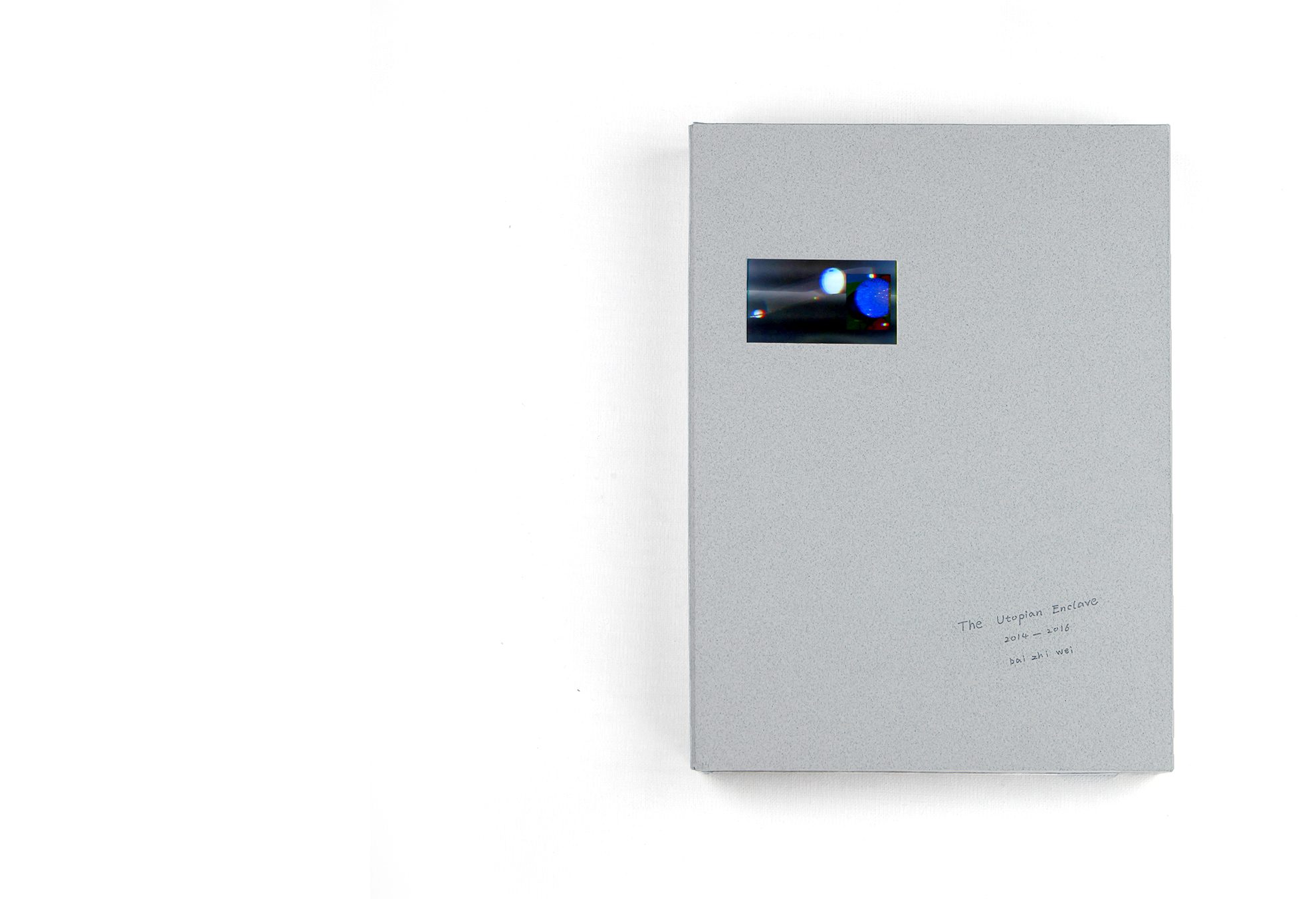
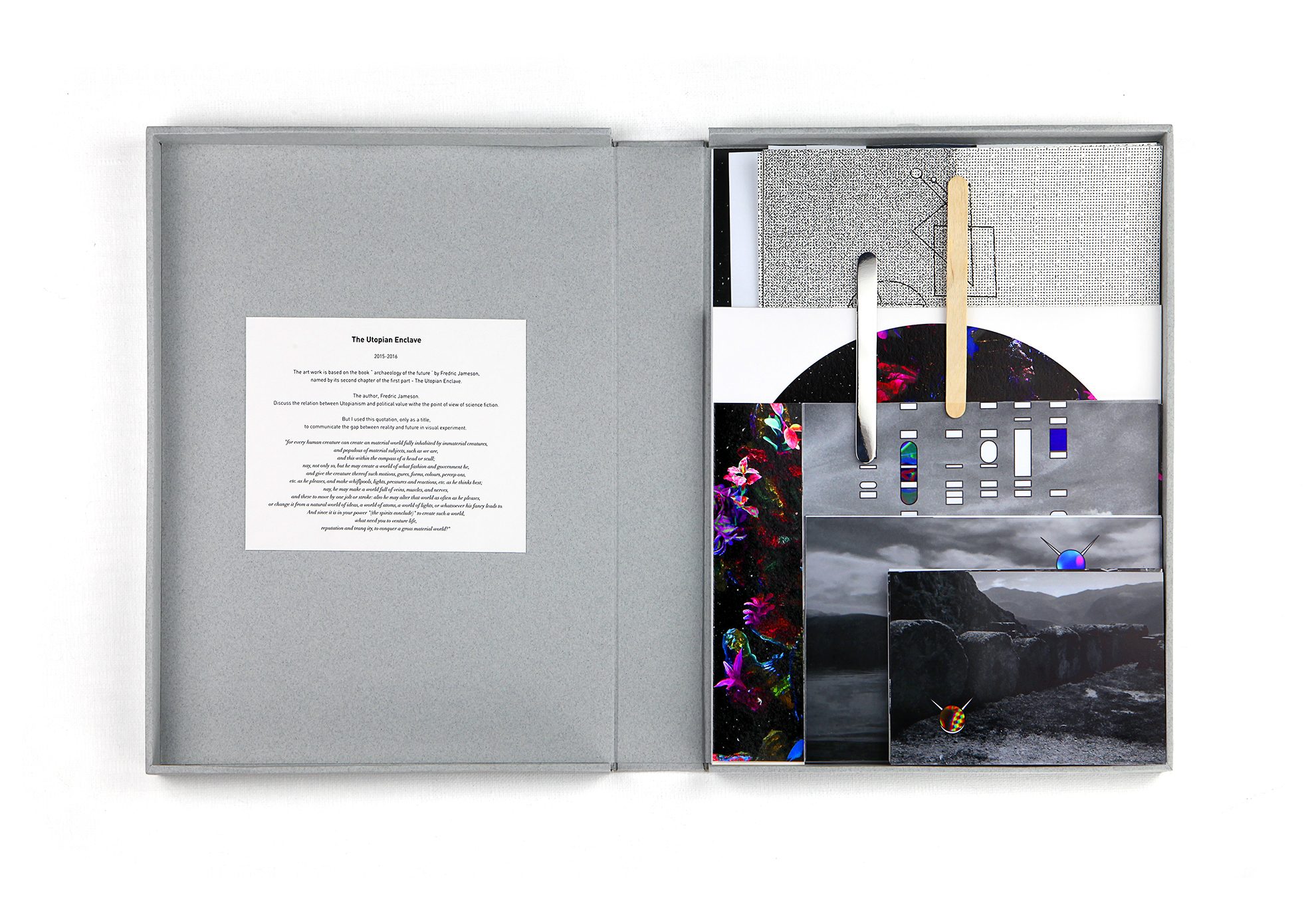
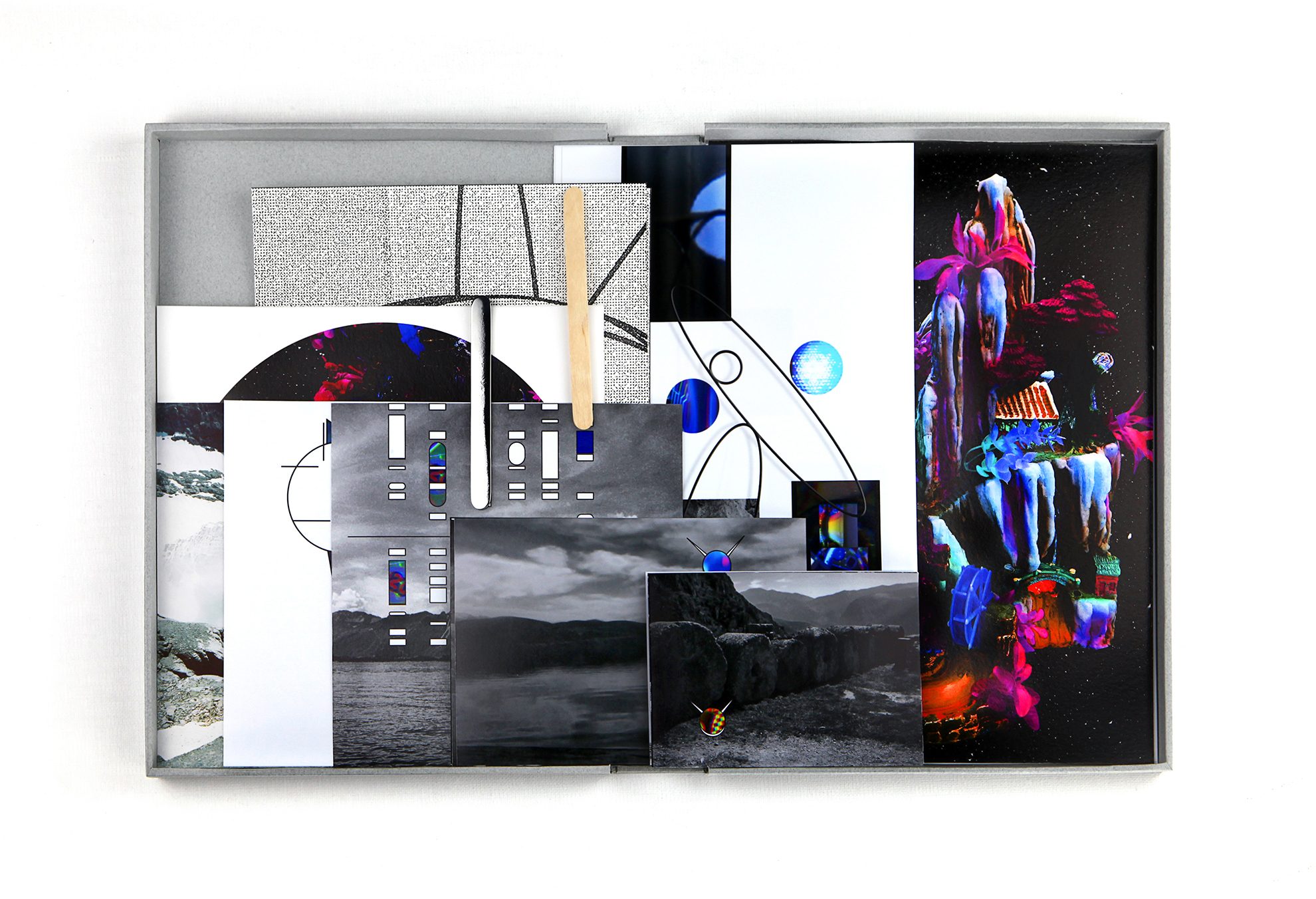
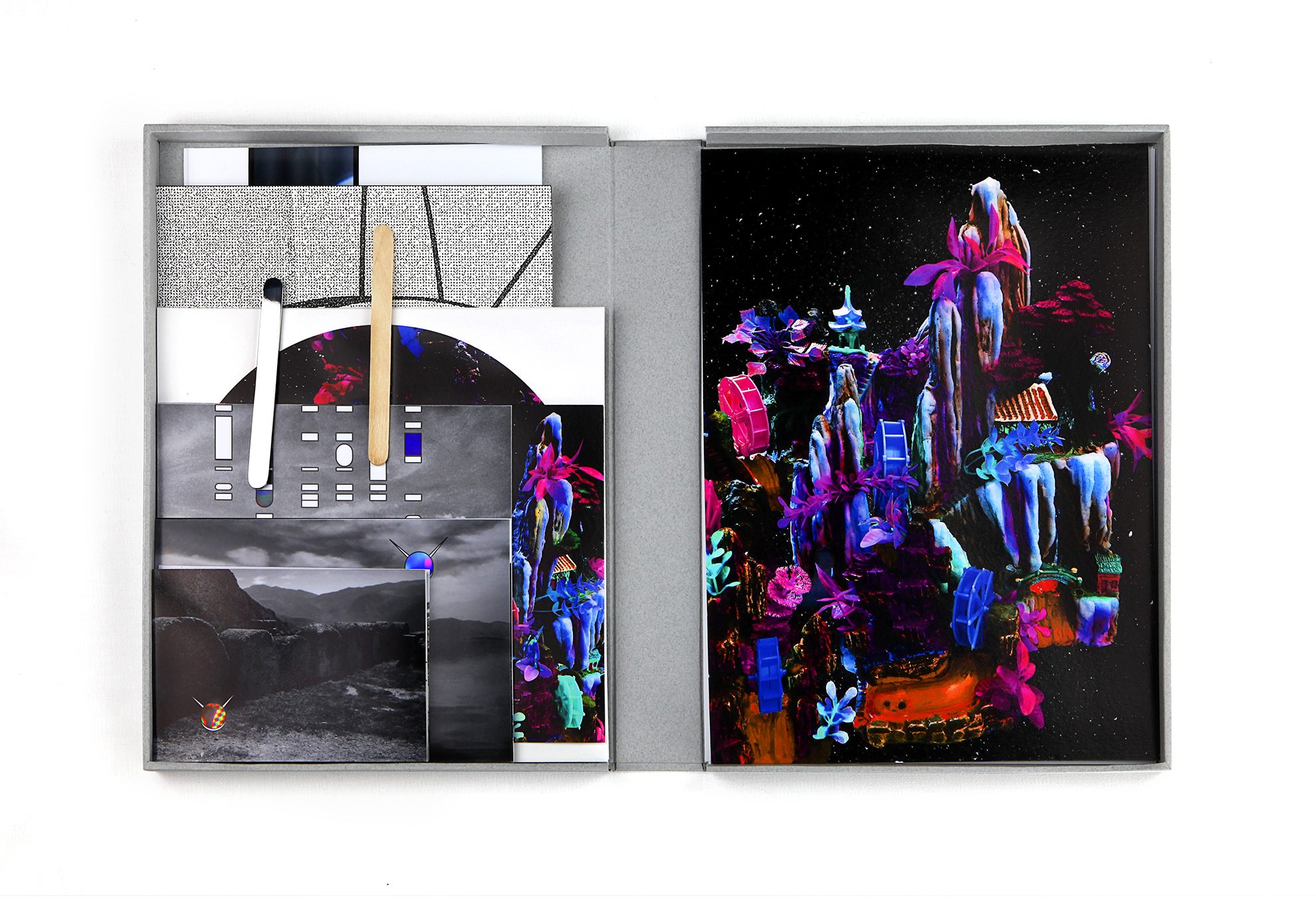
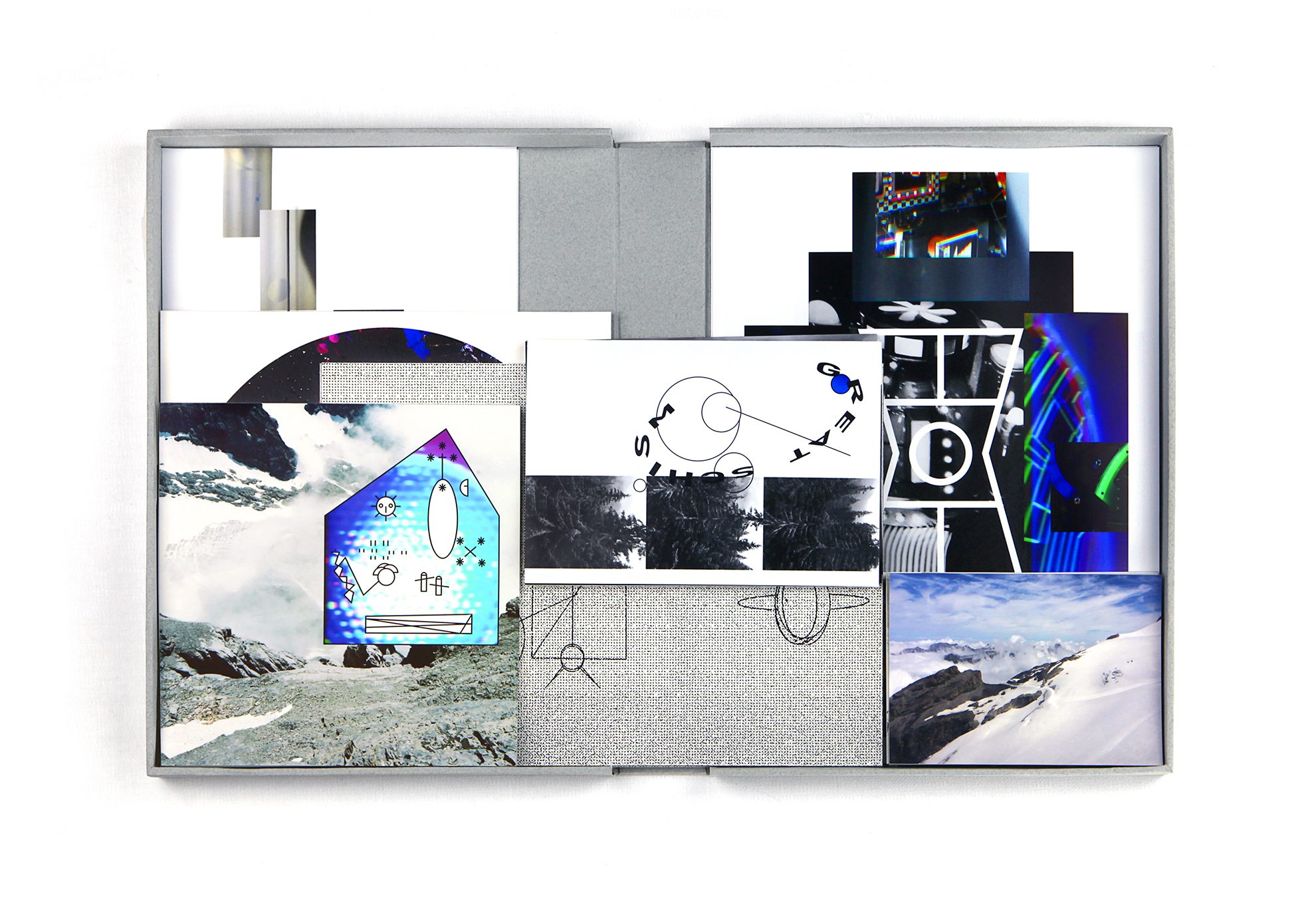
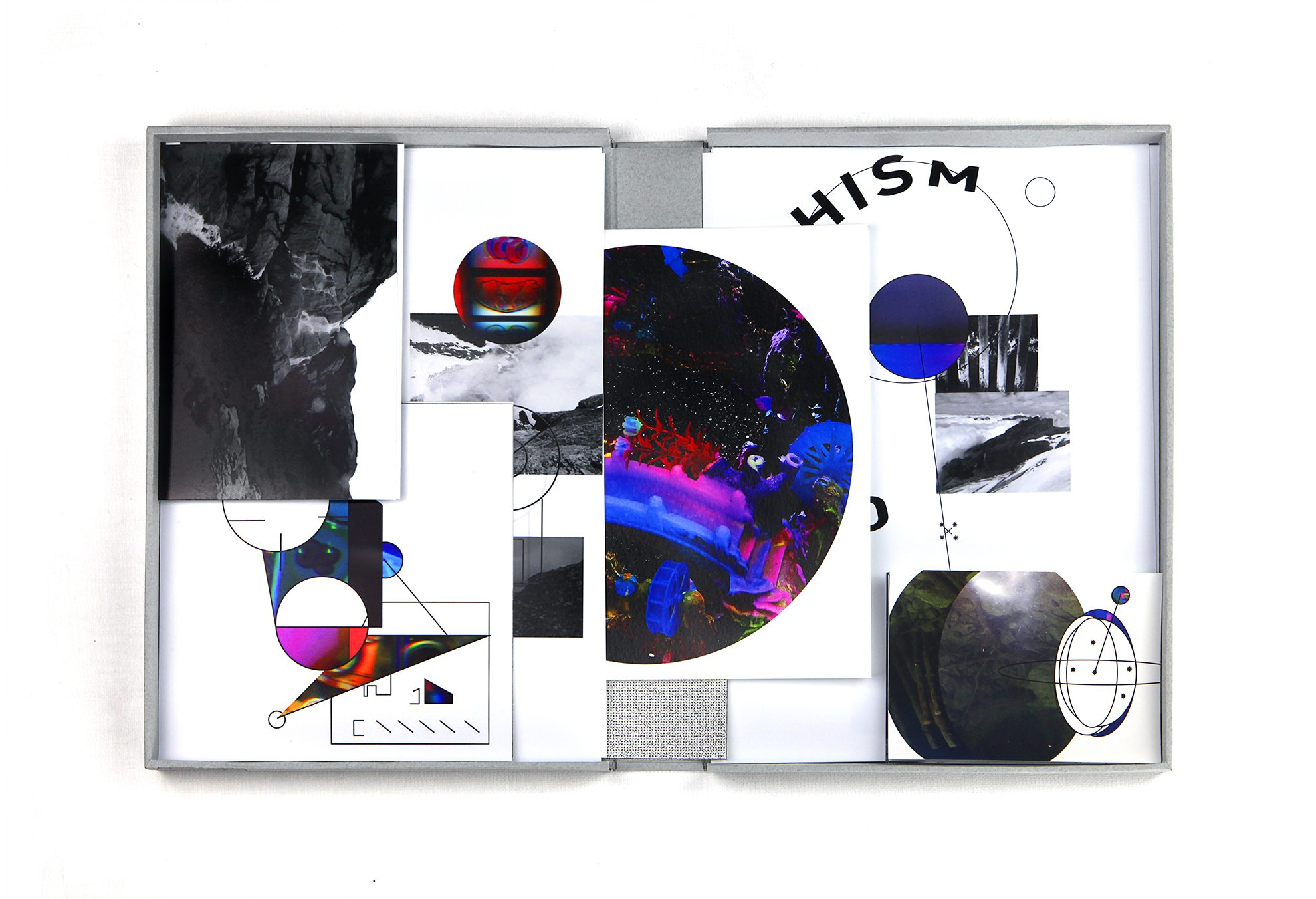
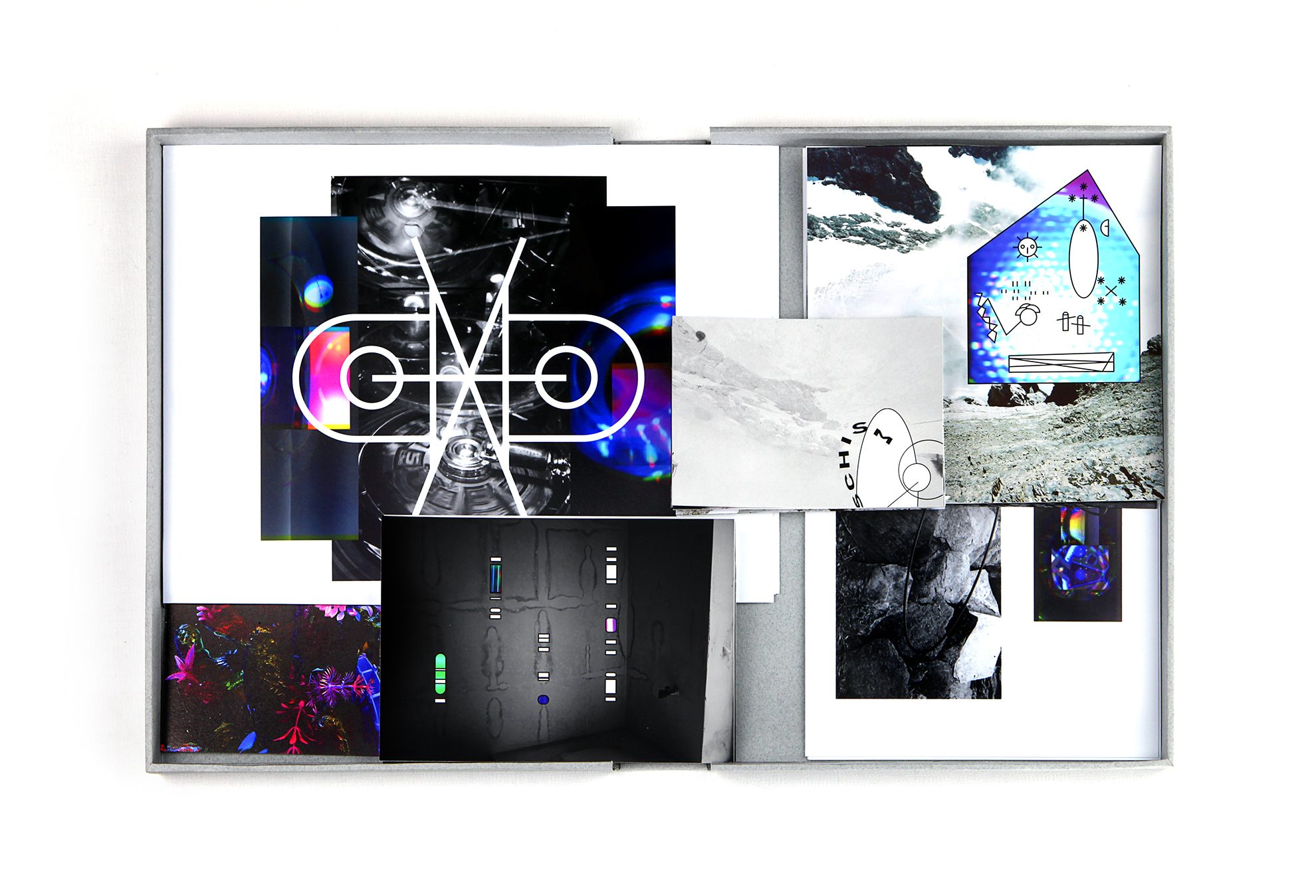
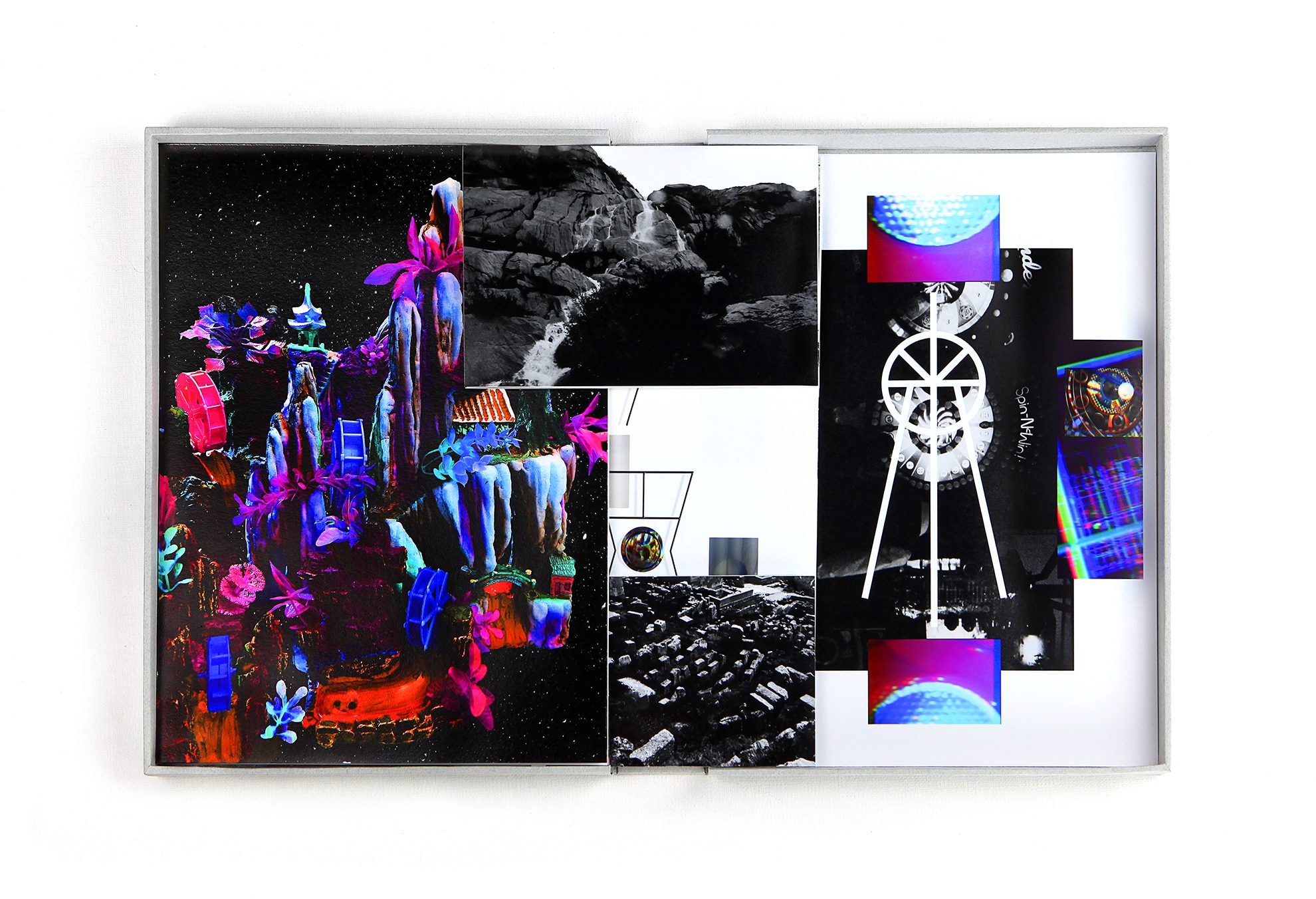
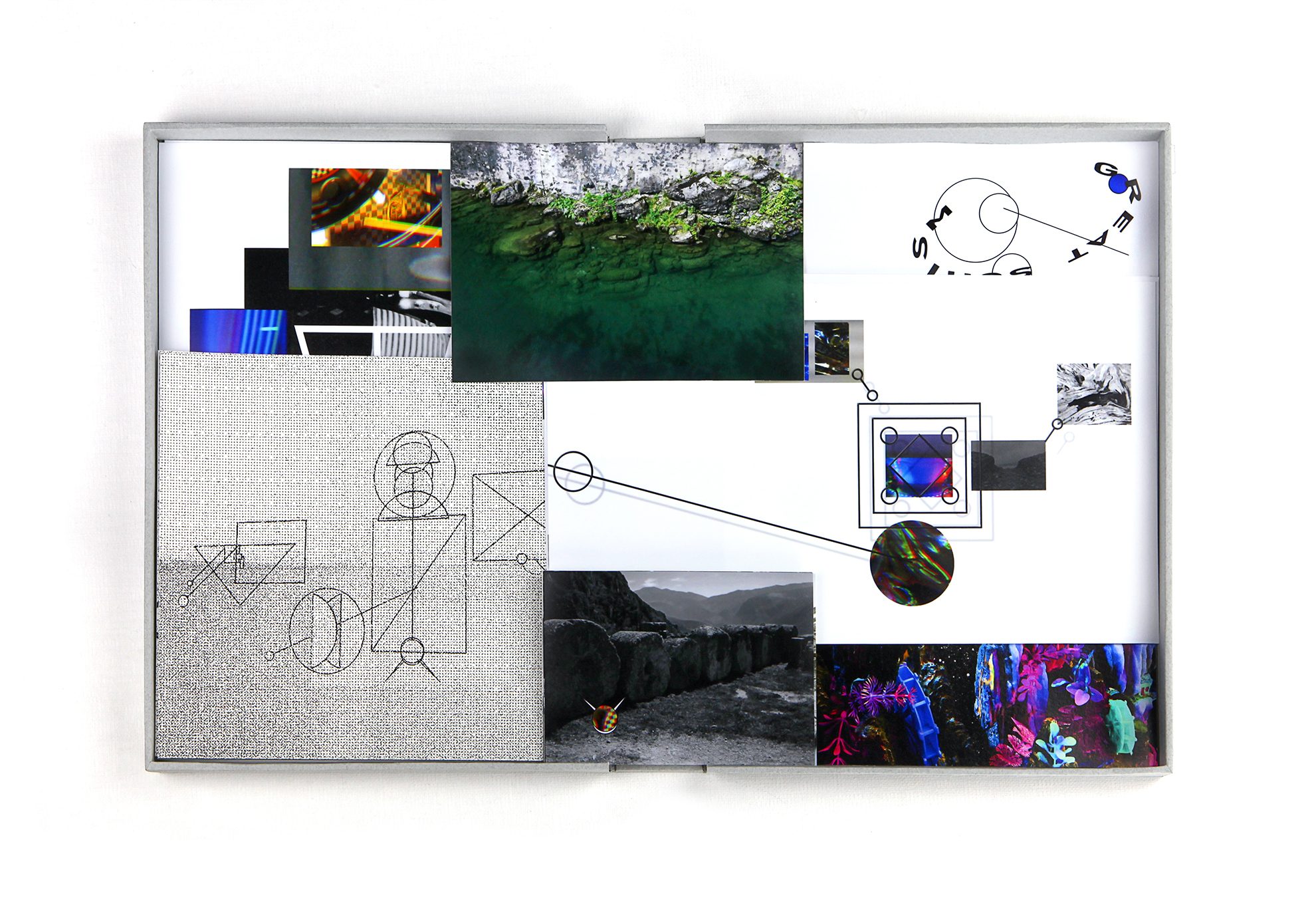
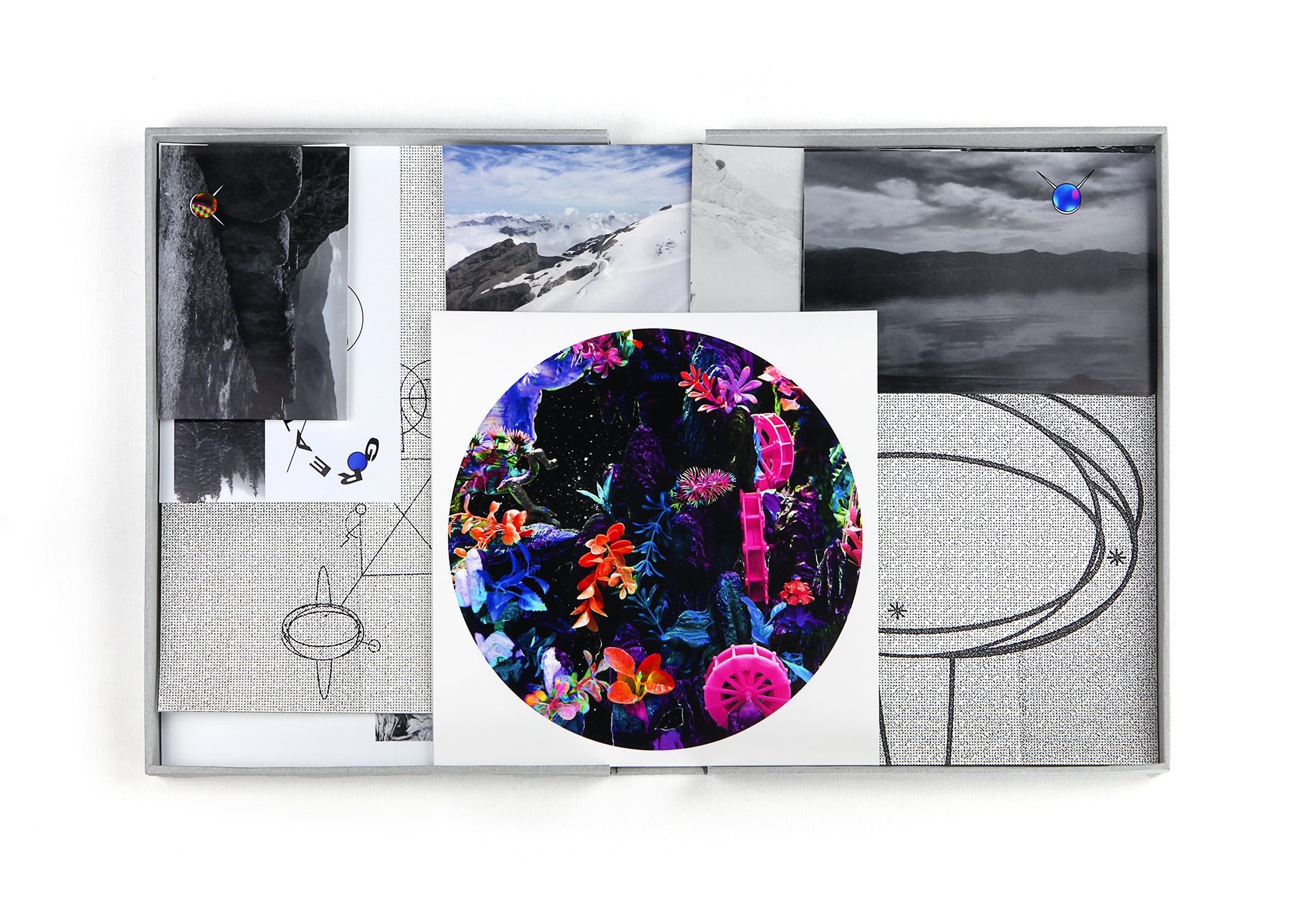
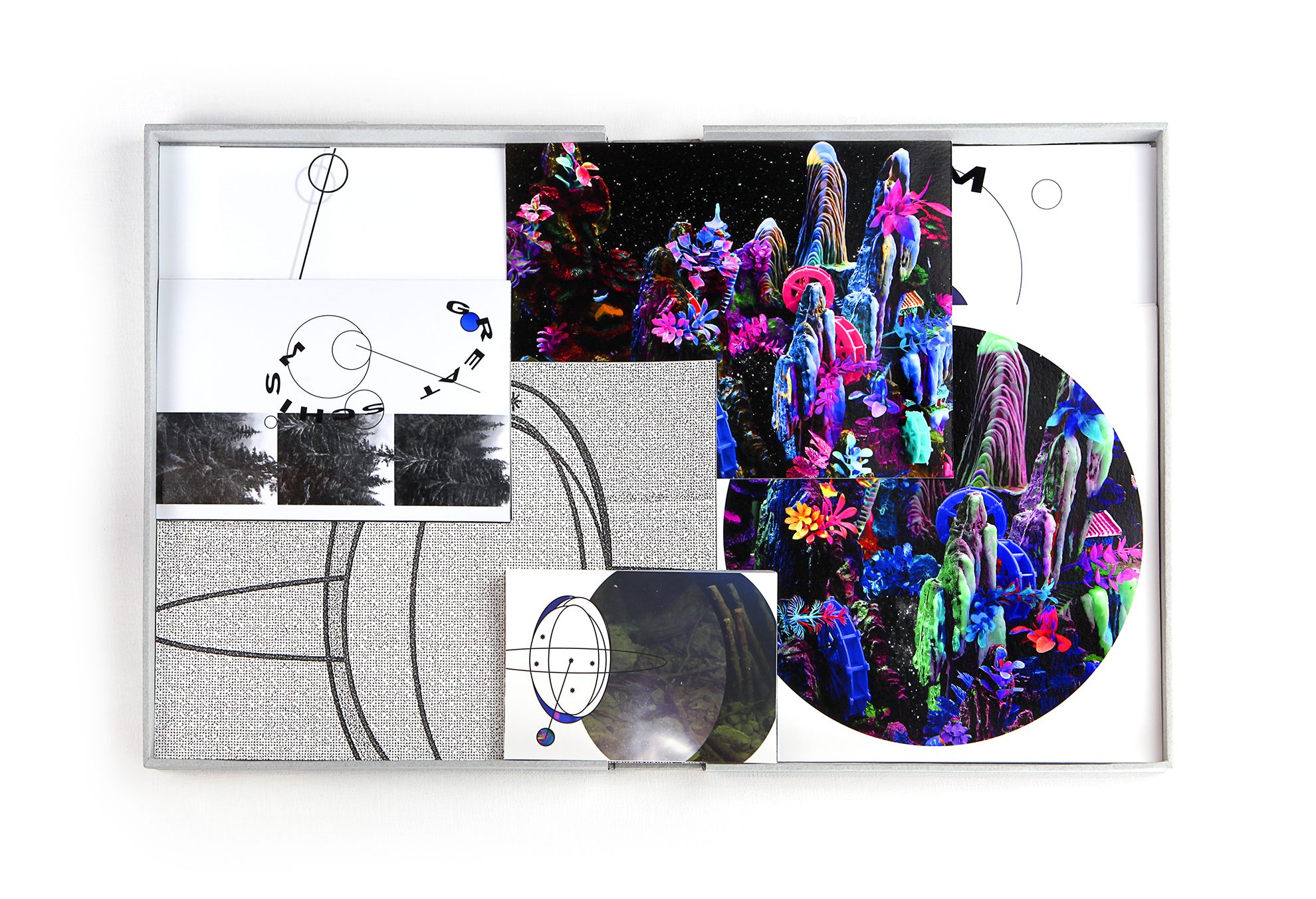
The artist publication The Utopian Enclave brings photographs, artificial landscapes, personal memories, and symbolic images together as loose sheets of varying sizes contained within a box. Without binding or a fixed reading order, the images can be removed, overlaid, juxtaposed, and rearranged. The box gives the archive a temporary boundary but cannot stabilize memory into a single narrative. Each opening produces another path of viewing, turning print into a portable miniature world of memory that remains open to change.
/FULL_PROJECT_TEXT
The Utopian Enclave is an artist publication composed of loose printed sheets housed in a box. It brings together photographs, constructed landscapes, personal memories, and symbolic images accumulated by Zhiwei Bai during this period, printing them across papers of different sizes, proportions, and formats. With no fixed binding or prescribed sequence, the images can be removed, overlaid, juxtaposed, and rearranged, turning reading into an ongoing process of dismantling and reconstructing memory.
The work developed alongside Bai’s exploration of the “utopian enclave,” but it is neither a catalogue nor a preliminary study for the installation of the same title presented in 2017. The two works are better understood as parallel manifestations of a shared conceptual field. While the spatial installation constructs an enclosed artificial nature from aquarium scenery, the publication gathers photography, symbols, and fragments of memory within the limits of a box, forming a miniature world that can be carried, opened, and recomposed.
Its loose-leaf structure disrupts the linear order conventionally imposed by the book. Images from different sources enter into provisional relationships whenever the sheets are handled, loosening their original connections to time, place, and meaning. Saturated artificial landscapes, photographs of nature, geometric forms, and elements of Bai’s early symbolic system overlap throughout the work. Memory consequently appears not as a history that can be fully reconstructed, but as a visual field shaped by movement, displacement, and renewed connection.
The publication brings Bai’s earlier symbols into contact with photography, travel, artificial nature, and personal archives. Paper operates as more than a surface for images: it becomes a spatial medium organizing distance, concealment, sequence, and chance, while memory is rearranged through the reader’s repeated handling of the loose sheets.
The “enclave” does not refer to a specific geographical location, but to a temporary form through which memory is gathered. The box gives scattered materials a boundary without resolving them into a single, stable narrative. Each opening and rearrangement can produce a different path through the work. The publication therefore becomes an open system of memory—one that preserves an archive while allowing it to continue changing through repeated acts of reading.
/OVERVIEW
艺术家出版物《乌托邦孤岛》将摄影、人工景观、个人记忆与符号图像印制在不同尺寸的散页中,并收纳于纸盒。它没有固定装订和唯一阅读顺序,图像可以被取出、覆盖、并置和重新排列。盒子为档案提供临时边界,却无法使记忆形成稳定叙事;每次开启都生成新的观看路径,使纸媒成为一座可以携带并持续变化的微型记忆世界。
/FULL_PROJECT_TEXT
《乌托邦孤岛》是一件由盒装散页构成的艺术家出版物。作品汇集柏志威在这一时期持续积累的摄影、人工景观、个人记忆与符号图像,并将它们印制在尺寸、比例和形态各异的纸张上。出版物没有固定装订,也没有预设唯一的阅读次序;图像可以从盒中被逐一取出、覆盖、并置和重新排列,使阅读成为一次不断拆解和重组记忆的过程。
作品沿用了柏志威同一时期关于“乌托邦孤岛”的思考,但它并不是2017年同名装置的图录或前期草稿。两者更像是同一组观念在不同媒介中的平行发展:空间装置通过水族箱造景搭建一座封闭的人工自然,出版物则把摄影、符号与记忆片段收纳进一个有限的纸盒,使其成为一座可以携带、开启和重新组合的微型世界。
散页结构改变了传统书籍由前向后展开的线性秩序。不同来源的图像在取放过程中临时相遇,原有的时间、地点和意义关系也随之松动。鲜艳的人工景观、自然照片、几何图形与早期符号系统彼此叠加,使个人记忆不再表现为一段能够被完整复述的历史,而成为一个持续移动、错位和重新连接的图像场。
这件出版物让早期符号与摄影、旅行、人工自然和个人档案共同出现。纸张不再只是承载图像的平面,而成为组织距离、遮挡、顺序与偶然关系的空间媒介;记忆也由此通过读者每次取放散页的动作被重新排列。
“孤岛”在这里并非指向一个确定的地理位置,而是一种记忆得以暂时聚集的形式。盒子为散乱的材料建立边界,却无法使它们形成唯一、稳定的叙事。每一次开启和排列,都可能产生另一种观看路径。作品由此把出版物转化为一个开放的记忆系统:它保存档案,同时也允许档案在反复阅读中继续变化。
THE UTOPIAN ENCLAVE — ARTIST BOOK
#